





What's ECM ?
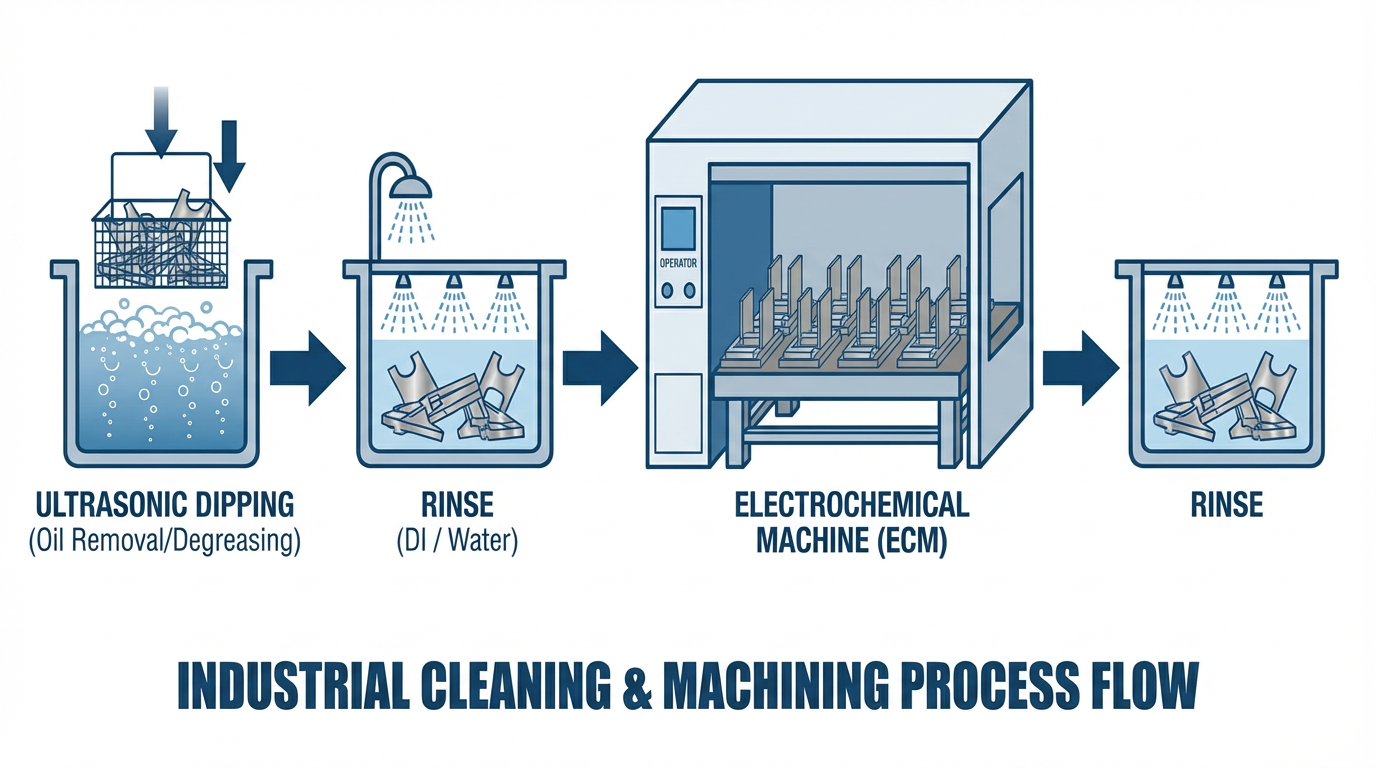
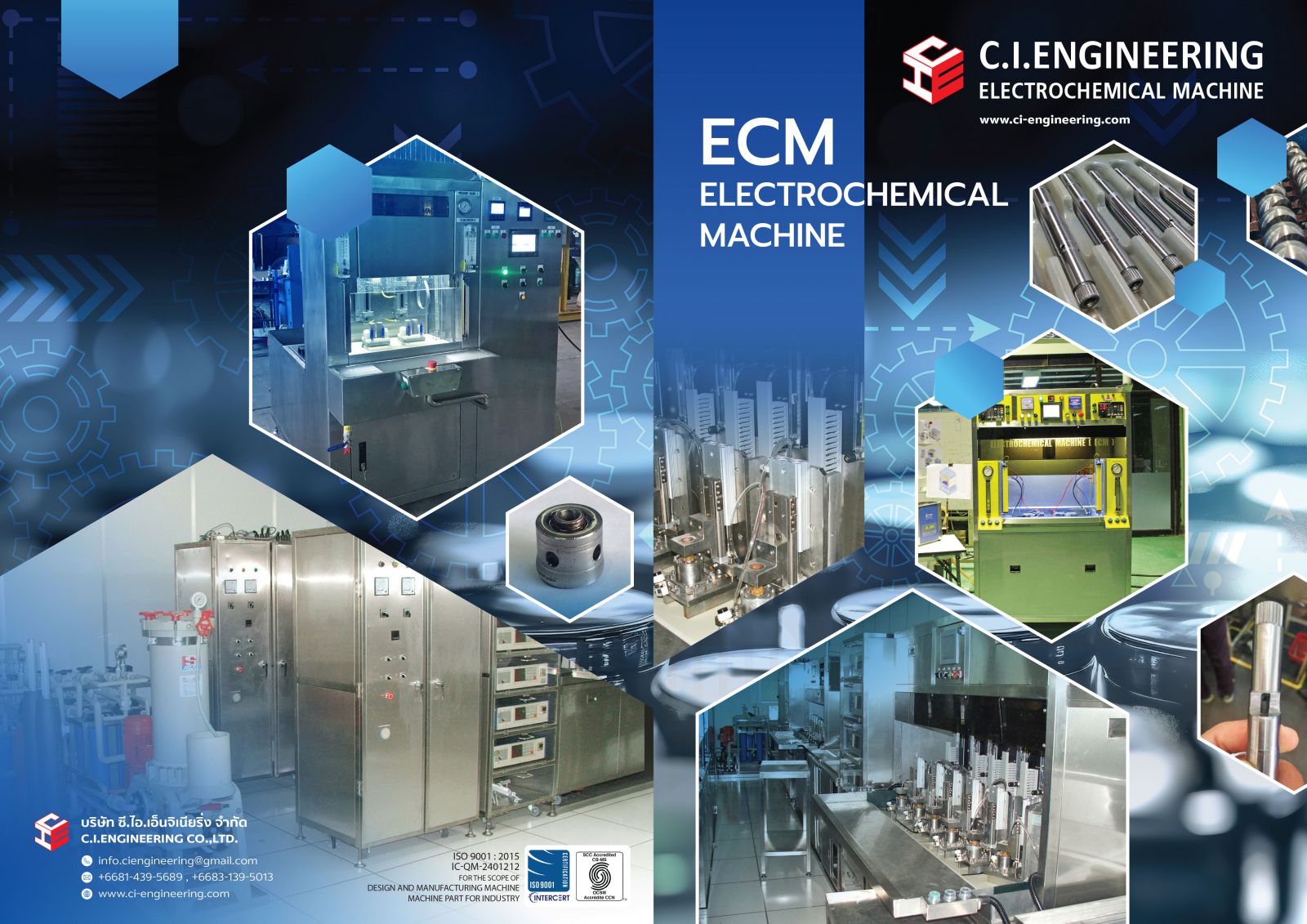
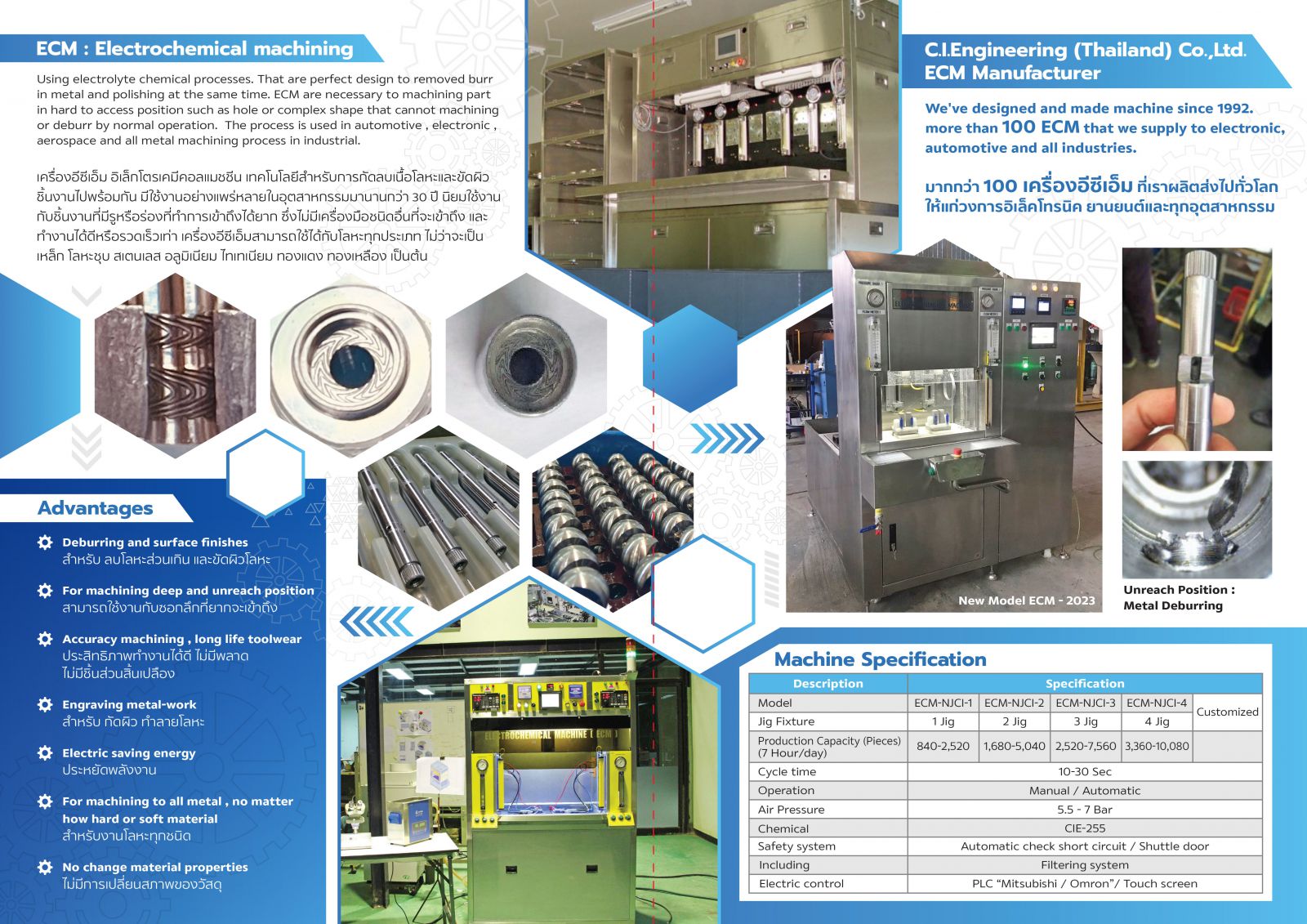
Understanding the ECM Machine: A Guide to Electrochemical Machining
If you have ever wondered how manufacturers shape extremely hard metals into complex designs without breaking their cutting tools, the answer often lies in an ECM machine.
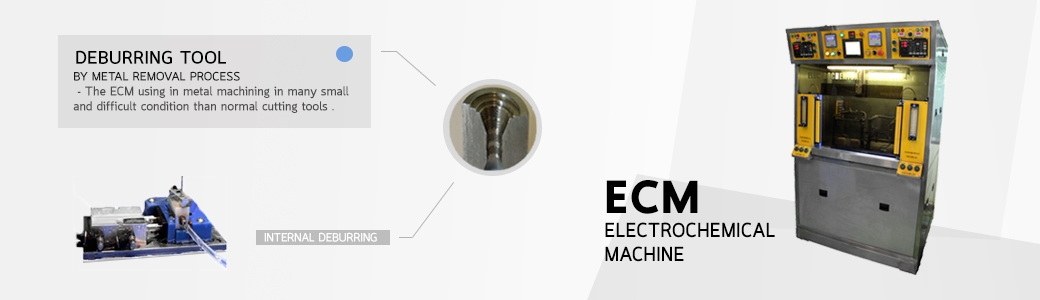
Electrochemical Machining (ECM) is an advanced, non-traditional machining process used to remove metal from a workpiece. Instead of using mechanical force, sharp edges, or heat to cut the metal, ECM uses electrical energy and chemistry to gently and precisely dissolve the material away.
Think of it as the exact opposite of electroplating. Instead of adding a layer of metal to an object, ECM takes metal away.
How Does an ECM Machine Work?
The ECM process relies on the principles of electrolysis (specifically, Faraday’s laws of electrolysis). Here is the step-by-step breakdown of how the machine operates:
-
The Setup: The material you want to shape (the workpiece) is connected to the positive terminal of a DC power supply, making it the anode. The cutting tool is connected to the negative terminal, making it the cathode.
-
The Gap: The tool is brought very close to the workpiece, but they never actually touch. A tiny gap (usually between 0.05 mm and 0.5 mm) is maintained between them.
-
The Electrolyte: A conductive fluid, called an electrolyte (often a highly pressurized solution of salt water or sodium nitrate), is continuously pumped through this tiny gap.
-
The Dissolution: When the high-current power is turned on, the electrical circuit is completed by the electrolyte. The metal atoms on the surface of the workpiece dissolve into the fluid as positive ions.
-
Flushing: The high-speed flow of the electrolyte washes away the dissolved metal particles and the heat generated by the process, leaving a perfectly matched cavity in the workpiece.
Key Components of an ECM Machine
-
DC Power Supply: Provides a constant, high-current (often thousands of amps) and low-voltage (usually 5 to 25 volts) electrical flow.
-
The Tool (Cathode): Usually made of copper, brass, or stainless steel. Because the tool never touches the workpiece, it does not suffer from mechanical wear and tear. It is shaped exactly like the reverse of the cavity you want to create.
-
The Workpiece (Anode): The metal being machined. The only requirement for ECM is that the workpiece must be electrically conductive.
-
Electrolyte Circulation System: Includes pumps, filters, and temperature controls to supply clean, pressurized fluid to the machining gap.
Advantages of Electrochemical Machining
ECM offers several unique benefits over traditional CNC milling or turning:
-
No Tool Wear: Since there is no physical contact between the tool and the workpiece, a single tool can be used to mass-produce thousands of identical parts without losing its shape.
-
Machines Extremely Hard Metals: The hardness of the metal does not matter. ECM can cut through tough superalloys, titanium, and hardened steel just as easily as soft aluminum.
-
No Heat Damage: Traditional machining generates immense friction and heat, which can warp or weaken the metal (creating a Heat-Affected Zone, or HAZ). ECM is a "cold" process, leaving the structural integrity of the metal perfectly intact.
-
Flawless Surface Finish: The chemical dissolution leaves a completely burr-free, smooth surface that rarely requires secondary polishing.
Common Applications
Because ECM is relatively expensive to set up, it is mostly used in high-tech industries for complex, critical components:
-
Aerospace: Manufacturing turbine blades for jet engines out of tough, heat-resistant superalloys.
-
Automotive: Creating complex fuel injection nozzles and engine parts.
-
Medical: Shaping delicate, perfectly smooth surgical implants (like artificial joints) where burrs or microscopic cracks are unacceptable.
-
Die and Mold Making: Sinking complex cavities into hardened tool steel for plastic injection molding.
ECM (Electrochemical machining) คือ กระบวนการกัดลบผิวชิ้นงานโลหะ โดยใช้หลักการไฟฟ้าเคมี ซึ่งถูกใช้ในการทำชิ้นส่วนโลหะที่มีความซับซ้อน ชิ้นส่วนโลหะที่ยากต่อการแมชชีนด้วยวิธีอื่นๆ และด้วยหลักการไฟฟ้าเคมี เครื่องECM จึงสามารถตัด กัด ลบคมผิวชิ้นงานได้ทั้งภายนอกและภายในของชิ้นงาน ไม่ว่าจะเป็นการกัดในมุมที่อยู่ลึก มุมที่ยากแก่การเข้าถึงภายในชิ้นงาน
ECM (Electrochemical machining)ใช้หลักการในทางตรงกันข้ามกับการชุบผิวด้วยไฟฟ้า สรุปคือใช้การลบผิววัตถุ แทนที่จะเพิ่มผิววัตถุ โดยวัสดุอุปกรณ์ เครื่องมือที่ใช้ในการทำงานของ ECM นั้นจะสึกหรอได้ยากเพราะการตัด-กัด ของเครื่อง ECM นั้นจะไม่มีการสัมผัสกันโดยตรงระหว่างตัวชิ้นงานกับอุปกรณ์ของECMSทำให้กระบวนการ Electrochemical machining นั้นมีผลลัพธ์การแมชชีนที่แน่นอน รวดเร็ว แม่นยำ ไม่มีความร้อน ไม่มีแรงเสียดทาน ไม่ก่่อให่เกิดความเค้นกับชิ้นงาน ได้ผลงานที่สะอาด ผิวงานเรียบ และสวยงาม